
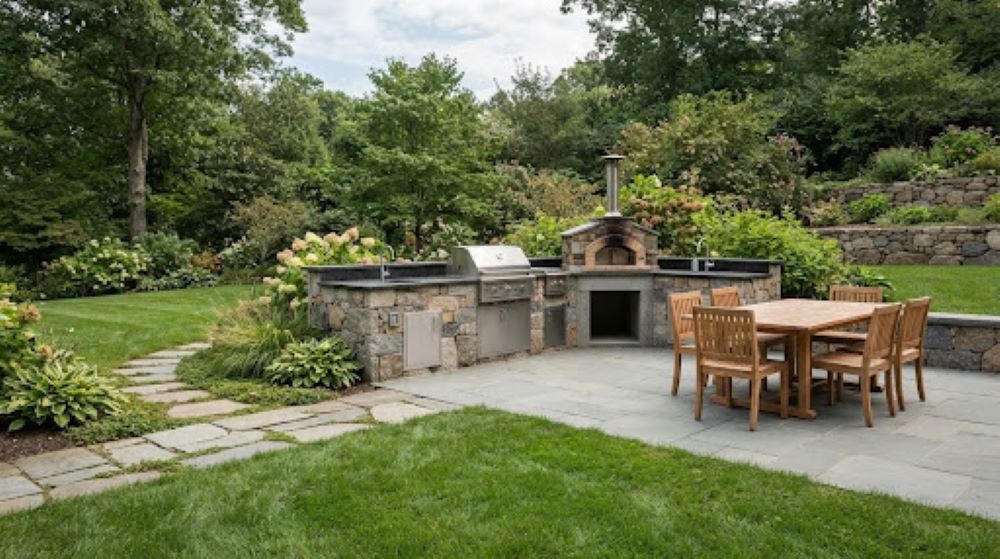
Design a Four-Season Outdoor Kitchen You Will Actually Use
Outdoor kitchens in Shelby Township have to work a lot harder than in warmer parts of the country. We get hot summers, cool evenings, wet springs, and deep winter freezes. If you want an outdoor kitchen you will really use, it needs to be planned for all four seasons, not just July cookouts.
A smart layout, good utility planning, and the right materials can stretch your grilling and entertaining time well into late fall and even early winter. When gas, electric, and water are planned correctly, and when pavers, stone, and countertops are chosen for our freeze-thaw cycles, your space stays safer, drier, and easier to maintain.
At Fresh Cut Lawn and Landscape, we design, build, and maintain custom outdoor living spaces right here in Shelby Township. We work with Michigan weather and local codes every day, so we understand what holds up and what causes problems in our area.
Plan Smart Layout Zones for Effortless Cooking and Entertaining
A great outdoor kitchen starts with clear zones. Think about how you move when you cook inside. That same flow should happen outside, just with more focus on safety and social space.
The main outdoor kitchen zones are:
- Hot zone: grill, side burner, smoker, pizza oven
- Cold zone: refrigerator, beverage center, ice storage
- Wet zone: sink, prep sink, cleanup area
- Dry zone: storage, counter space, serving and plating
Keeping these zones defined but connected helps a lot. For example, you want the hot zone away from kid traffic and seating, but still close enough that the cook can talk with guests. You want the cold zone near seating so people can grab drinks without crowding the grill. The wet and dry zones should be close together so you can prep, rinse, and serve with only a couple of steps.
Some popular layouts for outdoor kitchens in Shelby Township backyards include:
- L-shaped kitchens along a pavilion wall, with the grill on one leg and prep and serving space on the other
- U-shaped islands for larger patios, giving you a clear cooking side and a guest side with bar seating
- Straight-line layouts for narrow yards, often paired with a nearby dining table or fire feature
The right layout depends on how you use your space. Big game day parties, quiet family dinners, and large holiday gatherings all demand slightly different zone shapes and sizes.
Utility Planning Basics: Gas, Electric, and Water Done Right
Once the layout is clear, utilities are the backbone of your outdoor kitchen. Getting gas, electric, and water right is about safety, comfort, and long-term reliability.
For gas planning, most homeowners choose between:
- Natural gas, with a buried line that ties into your home supply
- Propane, with a dedicated tank and gas line
Natural gas is convenient because you do not have to swap tanks, but it usually means running a new gas line with shutoff valves in the right places. Propane can be simpler in some yards but still needs proper routing and ventilation. In both cases, gas work should be handled by licensed professionals, and local permits and inspections are often required.
Electrical planning is just as important. Outdoor kitchens often need:
- Dedicated circuits for grills, refrigerators, and other appliances
- Weather-rated outlets with GFCI protection
- Under-cabinet and task lighting around the grill and prep areas
- Accent and path lighting to keep the space safe after dark
Good lighting is what lets you cook safely during short fall evenings, so we usually plan multiple light levels: bright light over the grill and soft, warm light in seating and dining areas.
Water and drainage planning keeps the space clean and helps avoid ice problems later. Running water to the outdoor sink makes prep and cleanup far easier, but the lines must be installed with proper slope and insulation. Drainage planning should reduce standing water around the kitchen, which turns into dangerous ice in winter. Before deep freezes, water lines need to be shut off, drained, and winterized to protect pipes and fixtures.
Beat Michigan’s Freeze-Thaw Cycles with Durable Materials
Our freeze-thaw cycles can be tough on hardscapes and outdoor kitchens. Choosing the right materials and installing them correctly is just as important as how the space looks.
For hardscape surfaces, we often look at:
- Concrete pavers installed with proper base and drainage
- Natural stone that is rated for exterior use in cold climates
- Reinforced concrete with good control joints and finishes
Lower quality tiles, thin materials, or stone that is not rated for outdoor freeze-thaw can crack, chip, or flake when water gets in and freezes. Good base prep and drainage under patios and kitchen islands help move water away, so it does not sit and damage the surface.
Countertops and cabinets also need to stand up to temperature swings, stains, and UV. Popular countertop choices include granite, some engineered stones made for outdoor use, and concrete. These materials handle hot pans, cold weather, and sun without warping. For cabinets, weather-resistant options like powder-coated aluminum or HDPE are popular because they will not rot or swell in Michigan winters.
Details matter too. Stainless steel appliances that are rated for outdoor use, quality sealers on stone and concrete, and proper flashing and drainage around structures all help your outdoor kitchen hold up year after year in Shelby Township.
Seasonal Comfort Features for Late Fall and Early Winter Use
To get more than just summer use from your outdoor kitchen, you will want features that control wind, keep warmth in, and make the space inviting even when the air is cool.
Shelter and wind control can include:
- A pavilion over the kitchen and dining area
- A pergola with privacy screens or curtains
- Partial walls or knee walls that block wind without closing in the space
In our area, wind rolling in from Lake St. Clair can make a mild day feel cold fast. Thoughtful placement of walls and screens can turn a chilly, breezy yard into a comfortable, sheltered cooking and dining space well into November and early winter.
Heat and lighting are the next layer. Options include built-in gas heaters, outdoor-rated infrared heaters, and fire pits or fireplaces near the seating area. Layered lighting, with separate controls for task, ambient, and accent lights, lets you brighten the grill while keeping the seating area warm and cozy.
Storage and protection help your outdoor kitchen last longer with less effort. Built-in storage for covers, tools, and cushions keeps clutter out of sight. Durable covers and enclosures over appliances and countertops protect them from snow and ice so that when spring arrives, you have a quick cleanup instead of major repairs.
Frequently Asked Questions About Outdoor Kitchens in Shelby Township
How Much Does an Outdoor Kitchen Cost in Shelby Township?
Costs depend on size, appliances, materials, and the amount of gas, electric, and water work needed. Most projects range from a simple grill island to a full outdoor living area with a pavilion, seating, and fire features. A local contractor can give you a realistic range after seeing your yard and hearing your wish list.
Do I Need Permits for an Outdoor Kitchen in Shelby Township?
In many cases, yes. Gas lines, electrical work, plumbing, and structures like pavilions often require permits and inspections. A professional landscape and hardscape contractor can help with local rules and handle the permit process for you.
What Materials Hold up Best to Michigan Winters?
Freeze-thaw resistant pavers or properly rated natural stone, reinforced concrete bases, and granite or concrete countertops tend to perform well in our climate. Outdoor-rated stainless steel appliances and quality sealers also help. Proper installation and good drainage are just as important as the material itself.
Can I Use My Outdoor Kitchen in Late Fall and Early Winter?
Yes, if it is planned for it. A covered structure, windbreaks, outdoor heaters, and good task and ambient lighting can make your outdoor kitchen comfortable well into late fall and even early winter on many days.
How Do I Winterize My Outdoor Kitchen in Michigan?
You should shut off and drain water lines, follow manufacturer directions to protect appliances, and cover grills and countertop surfaces. It also helps to store or protect items that can be damaged by snow and ice. Your outdoor kitchen installer can walk you through a simple winterization checklist for your specific setup.
Get Started With Your Dream Outdoor Living Space Today
Transform your backyard into a true extension of your home with custom-designed outdoor kitchens in Shelby Township tailored to your lifestyle. At Fresh Cut Lawn and Landscape, we work closely with you to create a functional, beautiful space where you can cook, entertain, and relax. If you are ready to talk details or schedule a consultation, simply contact us and we will help you take the next step toward your ideal outdoor oasis.